
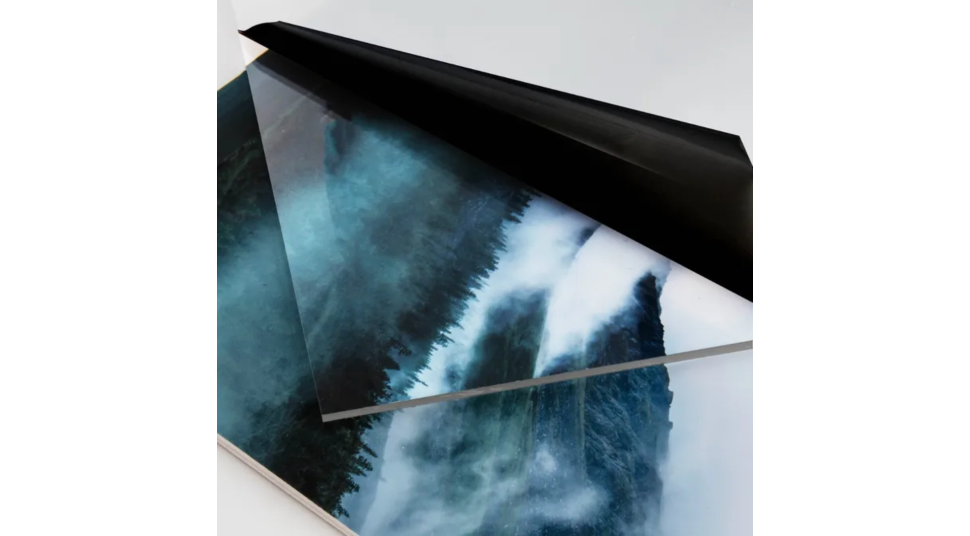
Glass vs. Acrylic: The Winner is Clear
If you are framing artwork, photography, or a meaningful print, the glazing you choose matters more than most people realize. The right protective barrier enhances clarity, reduces glare, blocks harmful UV rays, and protects your piece for years to come. The wrong choice can add unnecessary weight, increase the risk of breakage, or compromise presentation.
When it comes to glass vs. acrylic for framing, both materials serve a purpose. However, for most custom framing applications, acrylic offers distinct advantages in safety, durability, clarity, and versatility.
Here is how they compare.


Durability and Safety
Acrylic is significantly more impact resistant than glass. Unlike glass, which can shatter on impact, acrylic is designed to withstand handling and accidental bumps.
This makes acrylic an ideal choice for:
- Homes with children or pets
- High-traffic areas
- Commercial spaces
- Large wall installations
- Artwork that will be shipped
For oversized frames in particular, safety becomes critical. Acrylic reduces the risk of breakage during transport and installation, protecting, artwork the surrounding space, and the people who come into contact with the work.
Because American Frame custom manufactures each frame, we engineer our frames to properly support acrylic glazing at larger sizes, ensuring structural integrity without unnecessary weight.


Non-glare acrylic reduces reflections, making it easier to enjoy your artwork clearly in a variety of lighting conditions.
Weight and Installation Advantages
Acrylic weighs significantly less than glass. As frame sizes increase, the weight difference becomes even more noticeable.
Lighter glazing offers several benefits:
- Easier installation
- Less strain on hanging hardware
- Reduced wall stress
- Lower shipping costs
- Safer handling during framing and beyond
For large-scale artwork, gallery walls, or multi-piece installations, acrylic is often the practical and professional choice.


Acrylic is a great choice for larger pieces, offering a lightweight and durable option for displaying artwork at scale.
Clarity and Visual Presentation
Modern acrylic offers exceptional optical clarity that enhances the vibrancy and detail of artwork and photography. High-quality acrylic options can rival or exceed the visual performance of traditional glass.
At American Frame, we offer multiple acrylic grades, including:
- Standard, framer’s-grade clear acrylic
- Non-glare acrylic featuring a slight haze on the display side to reduce glare
- UV-filtering acrylic that blocks up to 99 percent of harmful ultraviolet rays
- A UV/Nonglare Option
- TruVue Optium Museum acrylic specifically for signature works of art or gallery and museum display, where archival quality, clarity AND glare reduction are critical.
UV protection is particularly important for preserving artwork over time. Exposure to UV light can cause fading and discoloration. Acrylic glazing with UV filtering helps maintain the integrity of your artwork for years.


Our acrylic specifier makes it easy to compare options side by side, helping you choose the right material based on clarity, glare reduction, and protection.
Glare Reduction Options
Both glass and acrylic are available in non-glare versions, but acrylic options provide flexibility without adding weight.
If your framed piece will hang opposite windows or in brightly lit rooms, anti-reflective or non-glare acrylic can significantly improve visibility while optimizing clarity.
Does Acrylic Scratch Easily?
This is one of the most common concerns.
Early acrylic products were more susceptible to surface scratches. Today, many premium acrylic options include abrasion-resistant coatings that improve durability in everyday environments.
Proper cleaning also matters. Acrylic should be cleaned with a microfiber cloth and an acrylic-safe cleaner rather than traditional glass cleaner (the exception being Optium Museum acrylic, which is cleaned like glass). If you do have a scratch in your acrylic, it can be treated with Novus Acrylic Scratch Remover.
With appropriate care, acrylic maintains its clarity beautifully over time.
Does Acrylic Look Cheap?
High-quality framing acrylic is not the same material used in inexpensive poster frames.
Museum-grade and optical-grade acrylic is widely used in galleries and professional exhibitions because of its clarity, lightweight strength, and conservation properties. When paired with a well-constructed custom frame, acrylic provides a clean, refined presentation suitable for residential, commercial and exhibition spaces.


Acrylic glazing provides a clear, lightweight finish that works beautifully for larger framed pieces displayed in the home.
When Glass May Be the Right Choice
While acrylic offers clear advantages in many situations, glass still has appropriate uses.
Glass may be suitable for:
- Small tabletop frames
- Frames that will not be moved frequently
- Traditional décor preferences
- Pastel and charcoal drawings that have not been treated with fixative, where the artist prefers not to encapsulate the work in acrylic
For smaller frames where weight and breakage risk are minimal, glass may perform well.
The key is selecting the glazing that best fits the environment and long-term goals for the piece.
Which Is Better for Large Frames?
For large frames, acrylic is by far the superior option.
The larger the frame, the heavier and more fragile glass becomes. Acrylic reduces overall weight while maintaining strength and clarity. It also minimizes the risk of damage during shipping, which is especially important for oversized artwork.
For this reason, acrylic is the preferred glazing for many professionals when working at scale.


Acrylic is significantly lighter than glass, making it a safer and more practical choice for larger framed artwork.
Environmental Considerations
Both glass and acrylic are recyclable materials. However, acrylic’s durability and lighter weight offer indirect environmental benefits:
- Reduced breakage during transport
- Lower shipping emissions due to lighter weight
- Longer-lasting installations with fewer replacements
Choosing the right glazing reduces waste over the lifetime of the framed piece.
When to Choose Acrylic
Acrylic is an excellent choice if you are framing:
- Large artwork
- Pieces that will be shipped
- Artwork in high-traffic areas
- Children’s rooms or public spaces
- Gallery walls
- Valuable pieces requiring UV protection
Its combination of clarity, strength, and lighter weight makes it a versatile solution for most custom framing applications.


Acrylic is ideal for gallery walls and sunlit spaces, offering UV protection that helps preserve artwork while maintaining a clean, lightweight display.
The Clear Winner
Both glass and acrylic protect framed artwork. However, when you consider durability, safety, weight, UV protection, and installation ease, acrylic offers meaningful advantages in most modern framing environments.
At American Frame, we custom manufacture each frame to ensure the glazing, structure, and craftsmanship work together seamlessly. Whether you are framing a cherished photo, limited-edition print, or large-scale work, our website walks you through the options as you build your design within our online Custom Frame Designer.
Still want help? Contact our team for guidance and order free samples to compare and help you select the acrylic option that provides the right level of clarity and protection for all your framing projects.
View our choices here.
Acrylic FAQs
Q. Will my acrylic bow at larger sizes?
A. Acrylic can flex slightly at larger sizes, which is a natural characteristic of the material. However, when properly supported within a well-constructed frame, bowing is minimal and does not affect the appearance of the artwork.
At American Frame, we custom manufacture each frame to provide proper structural support for larger glazing panels. For oversized pieces, we may recommend thicker acrylic to maintain stability and ensure a flat, professional presentation.
If you are framing a particularly large piece, our team can help you select the appropriate thickness to prevent noticeable flexing.
Q. Should I be concerned about static charge?
A. Acrylic can carry a static charge, which may attract dust during installation. In some cases, it can also interact with lightweight media such as pastels, charcoal, or delicate paper.
There are effective solutions. Anti-static cleaning methods help reduce surface charge, and mats or spacers can be used to create separation between the acrylic and the artwork when appropriate.
For charcoal or pastel drawings that have not been treated with a fixative, a professional framing technique known as encapsulation may be considered. In this approach, the acrylic is placed in direct contact with the surface of the artwork and becomes an intentional, permanent component of the finished piece. When properly executed, the acrylic stabilizes loose pigment by holding it gently in place, functioning similarly to a fixative while avoiding the tonal shifts or darkening that spray fixatives can sometimes cause.
For exceptionally fragile works that cannot tolerate any static interaction, advanced glazing options are available. Tru Vue Optium Museum Acrylic is manufactured with proprietary anti-static technology and is frequently specified for conservation-focused applications involving delicate media. In certain cases, traditional glass may also be recommended, particularly when static sensitivity outweighs the benefits of acrylic.
Selecting the appropriate glazing for friable media requires careful consideration of the artwork’s condition, scale, and intended environment. Our framing specialists can help evaluate these factors to determine the most suitable and preservation-conscious solution.
Q. Can acrylic be placed directly against my art?
A. It is entirely appropriate to place acrylic directly against artwork when framer’s grade materials are used and proper handling protocols are followed. The surface of the acrylic must be clean, dry, and free of any residual moisture or cleaning solution before assembly.
As noted above, acrylic is intentionally placed in direct contact with certain charcoal and pastel drawings through a technique known as encapsulation, where it becomes a stabilizing component of the finished piece.
There are many situations in which direct contact is not only acceptable, but preferable. Posters, photographic prints, and certain works on paper may benefit from a minimal presentation without matting or added depth. When executed properly, direct placement can create a clean, contemporary aesthetic while maintaining appropriate protection.
As with any framing decision, the condition of the artwork, the media involved, and the intended environment should guide the approach. Our framing specialists can help determine whether direct contact or spaced glazing is the most appropriate solution for your specific piece.
Q. Is acrylic as clear as glass?
A. High-quality acrylic offers exceptional optical clarity and can rival or exceed standard framing glass.
Premium acrylic options are widely used in galleries and exhibitions because they provide excellent transparency while being lighter and more impact resistant than glass. Optical-grade acrylic delivers a clean, vibrant presentation that enhances color and detail without adding unnecessary weight.
The clarity difference between quality acrylic and standard glass is minimal. In larger frames especially, acrylic often provides a more practical and reliable solution because its lighter weight reduces strain on the frame, hardware, and wall surface while maintaining a crisp, clear viewing experience.
Q. Will acrylic scratch easily?
A. Modern framing acrylic is significantly more durable than early generations of the material. Many premium options include abrasion-resistant coatings designed to improve surface performance in everyday residential and commercial environments.
While acrylic is more impact resistant than glass and will not shatter, its surface should still be treated with appropriate care. Standard Clear, Non-Glare, UV, and UV Non-Glare acrylic should be cleaned with a microfiber cloth and an acrylic-safe cleaner. Ammonia-based glass cleaners can damage the surface and should be avoided for these products.
Tru Vue Optium Museum Acrylic is formulated differently. It features a proprietary hard coat that offers superior scratch resistance and anti-static properties, and it can be cleaned with conventional glass cleaners using a soft, lint-free cloth.
With proper handling and cleaning, high-quality framing acrylic maintains its clarity and professional appearance for many years. For high-traffic or commercial applications, we can also recommend upgraded scratch-resistant options to provide additional durability.